Anthropometry in fashion is the measurement and analysis of body dimensions and proportions to design patterns, build sizing systems, and improve fit. Since bodies with the same waist can differ widely in shape, this data helps brands fit real customers, not an idealized body.
For pattern makers and designers, anthropometry is the foundation of a well-made garment. Moreover, its influence extends from the cutting table to the moment a shopper picks a size online.
Key takeaways
- Anthropometry describes real bodies, whereas a size chart shows how a brand groups those bodies into sizes.
- One correct measurement doesn’t guarantee good fit, since proportions, ease, and fabric also shape how a garment sits.
- Only 8% of women in one major study had an hourglass figure, yet many brands still design around it.
What Is Anthropometry in Fashion?
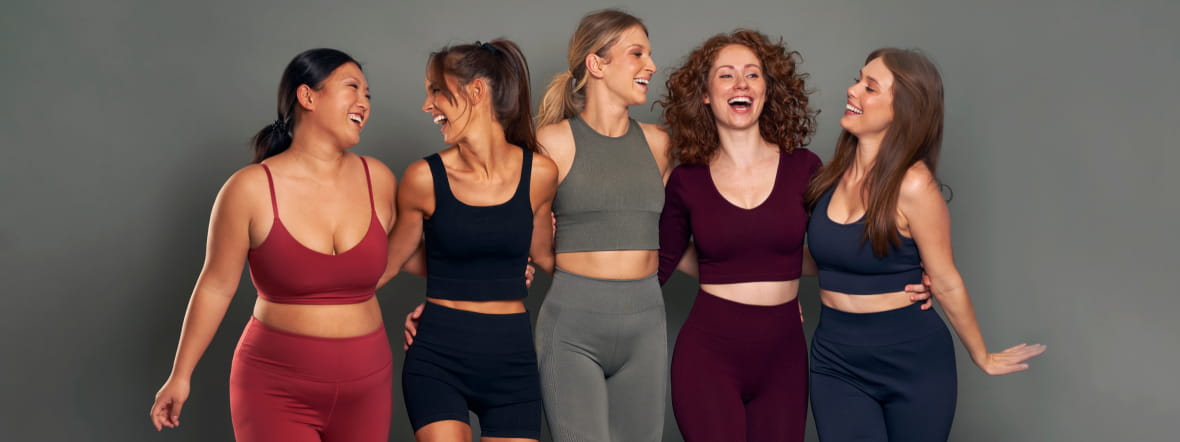
Anthropometry is the study of human body dimensions and proportions. In fashion, it covers body measurements such as height, bust, waist, hips, shoulder width, arm length, and inseam. It also examines how these measurements relate to one another.
To standardize this work, ISO 8559-1 defines how each body measurement for clothing should be taken. As a result, data collected in one market can be compared with data from another.
The real value, however, lies in scale. One person’s measurements describe one body, whereas anthropometric data from a population shows how thousands of bodies vary. That matters because brands don’t dress individuals; they need size ranges that fit large groups.
A Brief History of Anthropometry in Clothing
People have studied body proportions since antiquity, from Vitruvius to Leonardo da Vinci’s Vitruvian Man. However, systematic anthropometry only reached clothing with ready-to-wear. Once garments were mass-produced, the industry needed data on whole populations rather than individual clients.
The turning point came in 1939–1940, when the U.S. Department of Agriculture measured nearly 15,000 women. Published in 1941 as Women’s Measurements for Garment and Pattern Construction, the study by Ruth O’Brien and William Shelton shaped U.S. sizing for decades.
Until then, the authors noted, industry measurements had evolved largely by trial and error. Even so, the study had a blind spot: its final tables included only white women. Early sizing systems, therefore, rested on bodies far less diverse than the customers buying the clothes.
Why Does Anthropometry Matter for Clothing Design?
Mass-produced clothing starts from a base size and a set of assumptions about who will wear it. Consequently, those assumptions decide how many customers a garment actually fits. If the development body doesn’t represent the brand’s customers, fit problems are built in before the first sample is sewn.
What Are the Key Body Measurements for Clothing?
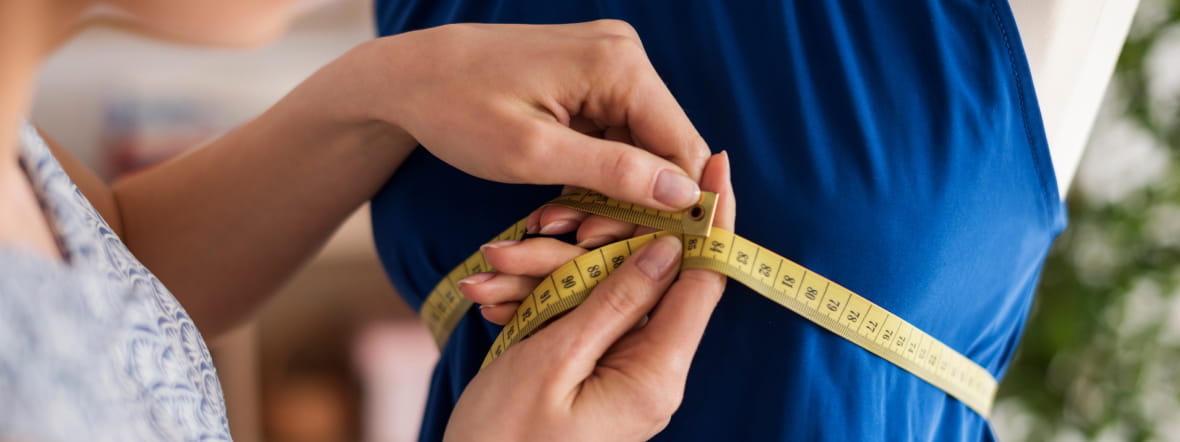
Each garment category relies on a different set of body measurements. Tops depend mainly on chest, shoulders, and arms, while trousers depend on waist, hips, rise, and inseam. The table below shows how each one is taken in clothing pattern making and where it affects fit.
| Measurement | How it is taken | Where it affects fit |
|---|---|---|
| Height (stature) | Standing upright, from the floor to the top of the head | Overall proportions, garment lengths |
| Bust / chest circumference | Horizontally around the fullest part of the bust or chest | Tops, dresses, jackets |
| Waist circumference | Around the natural waist, the narrowest part of the torso | Trousers, skirts, dresses |
| Hip circumference | Horizontally around the fullest part of the hips and seat | Trousers, skirts, fitted dresses |
| Shoulder width | Across the back, between the two shoulder points | Jackets, shirts, coats |
| Back waist length | From the nape of the neck down to the natural waist | Waistline placement, torso length of tops |
| Arm length | From the shoulder point over the bent elbow to the wrist | Sleeve length |
| Inside leg (inseam) | From the crotch to the floor or ankle | Trouser length |
| Body rise | From the waist to the seat surface, measured seated | Trouser rise and comfort |
How Do You Take Body Measurements for Pattern Making?
Reliable body measurements depend more on a consistent method than on any particular tool. ISO 8559-1, for example, anchors each measurement to landmarks such as the nape, shoulder point, and natural waist.
In practice, the person stands upright, arms relaxed, breathing normally, in minimal close-fitting clothing. The tape stays horizontal and snug, without compressing the body. Above all, the same protocol should be repeated every time, since small differences add up across many people.
Which Standards Define Body Measurements for Clothing?
Beyond ISO 8559-1, which defines the dimensions themselves, ISO 8559-2 sets primary and secondary dimensions for each garment type. ISO 8559-3, in turn, provides a method for building body measurement tables and size intervals.
For 3D scanning, ISO 20685 ensures scan-based measurements stay comparable with traditional ones. In addition, countries keep national references, such as ASTM tables in the United States and ABNT standards in Brazil.
Why Don’t All Body Types Fit the Same Size?
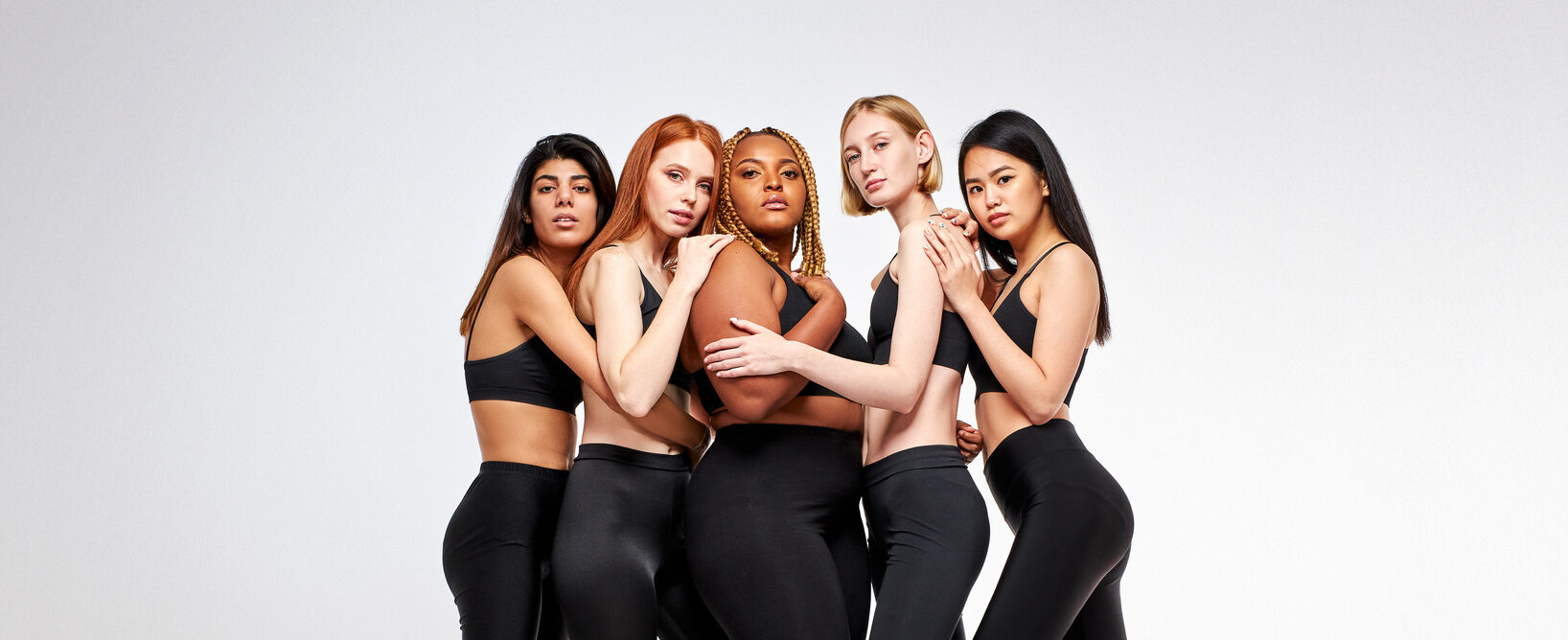
Two people of the same height can have different torso and leg lengths. Likewise, an identical waist measurement can come with very different hips. These variations aren’t exceptions but the norm, which is why one size rarely fits everyone wearing its label.
Research from North Carolina State University makes this concrete. After analyzing more than 6,300 women, a team led by Dr. Cindy Istook identified seven body shape categories. Only 8% had an hourglass figure, even though many manufacturers still design around it.
By contrast, about 46% of the women were rectangular and over 20% were spoon- or pear-shaped. In other words, a pattern built on idealized proportions misses many of the customers it targets.
Related: Size inclusive: A Necessary Conversation About Sizing in Fashion
What Are the Most Common Body Types?
The study used FFIT (Female Figure Identification Technique) for Apparel, which classifies body shapes from body measurements. Its seven body types are rectangle, spoon, triangle, inverted triangle, hourglass, top hourglass, and bottom hourglass.
A follow-up analysis of SizeUSA data then compared these shapes with industry sizing standards. It found that several standards targeted the hourglass, which helps explain why so many shoppers struggle with fit.
Body types also vary across populations, shaped by age, sex, genetics, ethnicity, and lifestyle. They change over time, too: SizeUK found the average British woman’s waist had grown about six inches since the 1950s.
Consequently, data that describes one population or generation won’t necessarily represent another. For brands committed to size inclusivity, the first step is knowing which bodies their data covers and which it leaves out.
How Are Anthropometry and Pattern Making Connected?
Anthropometry and pattern making meet at the base size. Before drafting a block, or sloper, the pattern maker decides which measurements and proportions define the target body. A target bust, waist, and hip, however, describe only part of it, since torso length, shoulder breadth, and rise also shape fit.
This is where anthropometric data proves most useful. Rather than dictating construction, it shows the real range of bodies behind the target measurements, strengthening every decision that follows. For a deeper look, see our guide to clothing pattern making.
Read More: Pattern Making: The Starting Point for Perfect-Fit Fashion
Does Anthropometric Data Define the Final Garment?
No. Pattern makers still interpret body data through silhouette, ease, fabric behavior, construction, and movement. A stretch top and a structured jacket may start from the same target body, for instance, yet end with very different patterns. In short, anthropometry supports pattern making expertise instead of replacing it.
How Does Anthropometry Inform Grading?
Grading scales a base pattern up and down to create the full size range. It is also where anthropometric data often reveals the biggest gaps. After all, body dimensions don’t grow at the same rate.
In the 1941 USDA study, women with a 46- or 47-inch bust were, on average, no taller than those with a 32-inch bust. Grade rules that add length to every size can therefore make larger sizes too long.
Instead, pattern makers can analyze how measurements actually change across a population. Using percentiles, they decide what share of the market each size covers and build grade rules around real bodies.
What Is the Difference Between Anthropometry and a Size Chart?
Anthropometric data describes bodies, whereas a size chart describes a sizing system. Brands combine anthropometric data with their own fit research to decide which dimensions their clothes should accommodate. The size chart then communicates those choices as commercial sizes, such as XS–XL or 36–46.
The relationship works like a chain, in which each link adds brand-specific decisions:
Anthropometric data → target body dimensions → pattern development → grading → garment sizing → size chart
As a result, a size chart reflects not only bodies but also each brand’s choices about fit, silhouette, and target customer.
Read also: The Ultimate Guide to Clothing Size Charts for Fashion E-commerce
Why Do Clothing Sizes Vary Between Brands?
Because each brand builds its own sizing system, target measurements, grade rules, fit models, and silhouettes all differ. A medium, then, isn’t a universal measurement but a label within one system.
Shoppers feel this directly. In a 2026 UK survey by Popsy, only 1% said their clothing size stays the same across brands. Meanwhile, 82% said it always or often varies, which turns online size selection into guesswork.
Anthropometry and Fit: Why Isn’t One Correct Measurement Enough?
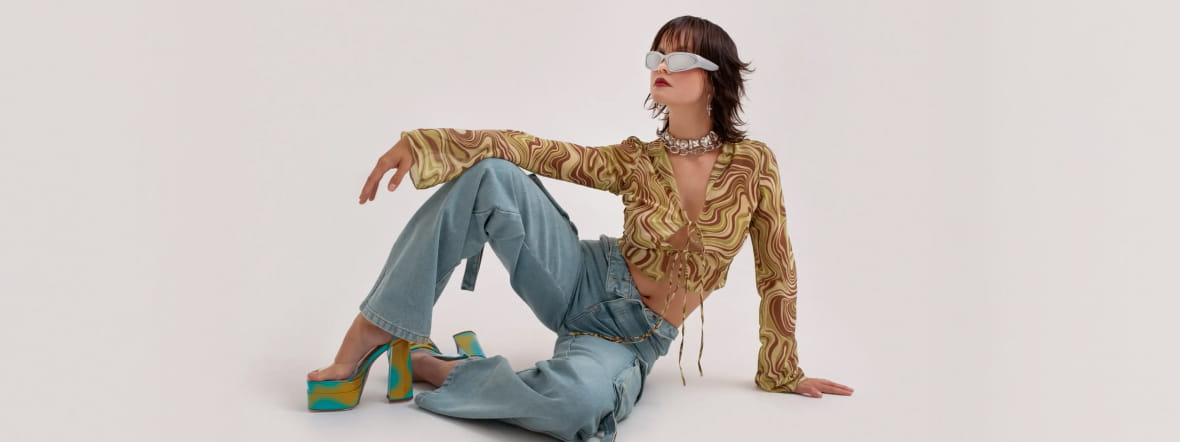
Traditional size selection focuses on bust or chest, waist, and hips. Useful as they are, these numbers don’t capture the full relationship between body and garment. A shopper’s waist may match a size perfectly, while another dimension makes it too tight, loose, long, or short.
Why Do Proportions Matter More Than Single Measurements?
Consider two shoppers with an 80 cm waist: one has 95 cm hips, the other 105 cm. The same trousers will fit them very differently, although the waist suits both.
The same logic applies across the body. Chest-to-waist proportions affect shirts and dresses, shoulder-to-chest proportions affect jackets, and torso length sets where a waistline falls. Anthropometry therefore maps how often each proportion occurs, revealing where a base pattern matches real bodies and where it doesn’t.
How Do Fabric, Ease, and Silhouette Change Fit?
Garment characteristics matter as much as body data. Stretch changes how closely a garment must match the body, while ease, the room built into a pattern, governs comfort.
Meanwhile, fabric weight and drape affect how a garment sits, and the silhouette decides whether a loose or close fit is desirable. Effective sizing, then, depends on how body, sizing system, and garment interact, not on one row of a chart.
How Is Technology Changing Anthropometry in Fashion?
For most of the 20th century, anthropometric research relied on tape measures, which made large surveys slow and expensive. Technology has since expanded both the volume and type of body data available. Today, it connects that data to every stage of the product lifecycle.
How Does 3D Body Scanning Work for Clothing Sizing?
3D body scanners capture the body’s surface in seconds, using structured light, lasers, or depth cameras. Software then extracts hundreds of body measurements from the resulting model. Beyond speed, scanning records shape as well as size, including curvature and posture that a tape cannot capture.
What Are National Sizing Surveys?
National sizing surveys apply 3D scanning to large, representative population samples. SizeUK measured around 11,000 adults in 2001–2002, and SizeUSA scanned roughly 10,000 people in 2003.
Later, between 2017 and 2019, SizeNorthAmerica scanned more than 18,000 people in the United States and Canada, the continent’s largest sizing survey. Its motivation was simple: the data companies relied on had become outdated.
How Do 3D Modeling and Digital Pattern Making Use Body Data?
Digital pattern making and 3D simulation software let teams fit patterns on avatars built from anthropometric data. As a result, designers can test a style on several body types before sewing a sample. These tools don’t replace fit expertise; rather, they help professionals apply it faster.
How Do Size Recommendation Systems Use Anthropometric Data?
Size recommendation systems carry this logic to the online store. They combine data about the shopper’s body with each garment’s measurements and fit to suggest the most suitable size. Consequently, the better a brand understands its garments and customers upstream, the more accurate these recommendations become downstream.
Can Anthropometry Reduce Returns in Fashion E-Commerce?
Yes, because most fit problems are decided before the order is placed. In a store, the fitting room settles fit in minutes. Online, however, shoppers must read a size chart alone and guess when their waist and hips point to different sizes.
Unsurprisingly, 73% of UK shoppers in the Popsy survey returned at least one online clothing item last year because it didn’t fit as expected.
Anthropometric principles change the question itself. Instead of “What size am I?”, shoppers should ask “Which size of this garment is right for me?” After all, the same shopper may wear different sizes across brands, and even within one brand.
Virtual fitting rooms put this principle into practice. Sizebay’s Virtual Fitting Room, for instance, combines a body-based size recommendation with each product’s information. More broadly, any brand that connects body, sizing, and garment data turns customer knowledge into a safer shopping experience with fewer returns.
Better Fit Begins With a Better Understanding of the Body
Ultimately, anthropometry in fashion is about understanding how bodies vary and translating that knowledge into clothing. For pattern makers, it strengthens patterns, proportions, and grading; for e-commerce teams, it connects the body to the product page.
As technology offers new ways to understand bodies and garments, anthropometry keeps fashion anchored to its essential reference point: the people who wear it.