
Most fashion brands treat average order value as a byproduct of other things going well. Traffic is up, conversion is solid, so AOV should follow. But that’s not usually how it works.
Increase average order value is a strategy focused on improving sales performance. It also helps brands understand whether shoppers are finding what they need and being presented with the right product recommendations.
The case for focusing here is straightforward: increasing AOV is often more cost-effective than acquiring new customers, since you generate more revenue from existing traffic without increasing ad spend. Considering that acquiring a new customer costs between 5-10x more than retaining an existing customer, increasing AOV is the most cost effective way to increase your margins.
The good news is that increasing AOV doesn’t require more ad spend or a bigger catalog. It requires creating a better experience at the moments that matter.
The strategies below are practical, grounded in real shopping behavior, and applicable whether you’re running a mid-size DTC brand or managing a large multi-category retailer.
Strategies at a Glance:
- Sell the outfit, not the item.
- Make bundles feel like a deal, not a discount.
- Capture revenue after the “yes”.
- Personalize recommendations across the full journey, not just the product page.
- Tier your free shipping threshold strategically.
Strategies to Increase Average Order Value
Before applying any strategy, it’s important to understand one thing: fashion consumers don’t buy only products, they buy context, confidence, and inspiration.
The more seamless, personalized, and trustworthy the shopping experience is, the higher the average value spent per order tends to be. That’s why increasing average order value in fashion e-commerce doesn’t depend only on pricing or promotions, but on the brand’s ability to create smart stimuli throughout the customer journey.
Below are some of the most effective strategies to turn purchase intent into larger carts and more engaged shoppers.
1. To increase average order valeu sell the outfit, not the item.
Most product pages are built around a single piece, and that makes sense from an operational standpoint. Although, this kind of logic misses how shoppers actually think.
When someone lands on a product page for a linen blazer, they’re not just thinking about the blazer. They’re thinking about what they’ll wear it with, where they’ll wear it, and how the whole outfit comes together. If you can answer those questions on product pages, you’ll sell more.
Use tools to recomend highly personalized outfit recommendations
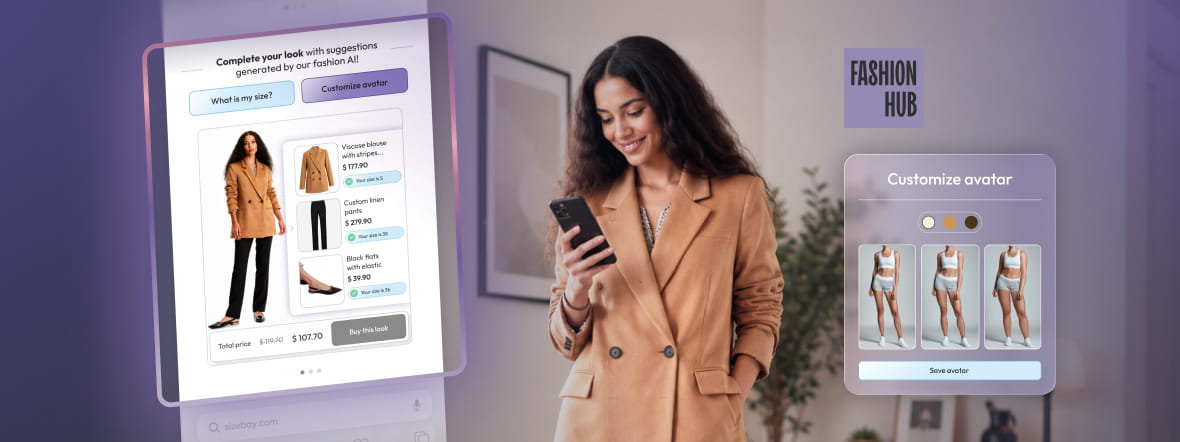
This is why “Complete the look” is one of the most effective strategies to increase average order value in fashion retail.
Although generic “you might also like” carousel pulled by an algorithm isn’t the same thing as a curated outfit that shows the blazer styled with other pieces. On the other hand, each piece must be easy to add to cart or the strategy will fail. The first feels like noise, whereas the second feels like a personalized service.
Getting this right takes some editorial effort. Someone needs to actually think about the pairings, shoot or style them properly, and merchandise them in a way that reflects how real people dress.
But the return on that effort is significant.
Shoppers who engage with outfit recommendations have larger carts. Besides, they’re also more likely to come back because the brand helped them look good, not just buy something.
A few principles worth following:
- Keep pairings tight and specific rather than showing six loosely related products;
- Anchor the look around an occasion or context rather than just aesthetics;
- Make sure every item in the look is in stock before you feature it. Nothing kills the moment faster than adding a look to cart and finding half of it unavailable.
Related: Anatomy of a high-converting product page: the ultimate guide
2. Make bundles feel like a deal, not a discount.
Bundling fails in fashion when it’s treated as a clearance mechanism. When three random pieces at 10% off appears and don’t match, it doesn’t inspire a purchase, it signals that the brand is trying to move inventory.
Believe me, your shoppers can feel the difference between a bundle built for them and a bundle built for the warehouse.
The bundles that trully increase Average Order Value are built around curation, not price reduction. A capsule wardrobe for a specific season, a “buy the set” option for coordinate pieces, a starter kit for a new category you’re expanding into. These feel like the brand doing the work for the shopper, which is what good retail has always been. When done right, bundling can increase Average Order Value by 55%.
The financial case for bundles is also stronger than most teams appreciate. A well-constructed bundle can hold margin while increasing cart size, because the value perception is driven by curation and convenience rather than percentage off. You’re not giving revenue away, you’re packaging it better.
A few things to get right: make the bundle feel intentional by explaining the logic behind it, even briefly. “Wear it three ways” or “everything you need for the weekend” is enough framing to shift perception.
Price the bundle so the savings are real but not dramatic, somewhere between 10 and 20 percent is usually the sweet spot. And merchandise bundles as their own products rather than just a cross-sell overlay on a PDP, so they get proper visibility in navigation and search.
3. Capture revenue after customers say “yes”.
The moment a shopper completes a purchase is one of the most underused touchpoints in fashion e-commerce. Buying intent is at its peak, trust has already been established, and the decision fatigue of checkout is behind them. Most brands send shoppers to a confirmation page that does nothing except confirm the order. That’s a missed opportunity.
A well-placed post-purchase offer, whether on the confirmation page itself or in the order confirmation email, can add meaningful revenue without touching conversion rate at all. The purchase is done. There’s no risk of disrupting the funnel.
The only question is whether the offer is relevant enough to earn another yes.
Use automaed post-purchased flows as a strategy to increase Average Order Value
It’s worth noting just how much upside lives in automated post-purchase flows. This search shows us automated emails like post-purchase messages generate up to 30x more revenue per recipient than standard campaigns, precisely because they are so timely and targeted.
On the confirmation page, the bar is high. The offer needs to feel like a natural extension of what the shopper just bought, not a pivot to something unrelated. If someone just bought a dress, show them shoes or a bag that works with it. If they bought a coat, show the scarf and gloves.
Keep the selection tight, two or three products maximum, and make the add-to-order mechanic as frictionless as possible. The fewer clicks between “I want that” and “it’s in my order,” the better.
Email is where you have more room to work.
Automated emails account for just 2% of email sends but drive 30% of revenue, earning 16 times more per send than scheduled campaigns. The confirmation email gets opened at a higher rate than almost any other message in your sequence, so it earns a place for a light cross-sell module.
Keep it secondary to the order summary, not the hero of the email. A follow-up email two or three days later, once the excitement of the purchase has settled, is a good moment to introduce complementary products at a slightly higher editorial register, styled content, a “what to wear with your new piece” angle, rather than a straight promotional push.
Related: Optimizing Checkout in Fashion E-commerce
4. Personalize recommendations across the full journey, not just the product page.
Most teams think about product recommendations as a PDP problem. Add a carousel below the fold, let the algorithm do its thing, done. But the product page is actually where personalization matters least, because the shopper already has context. They landed on a specific item. They know what they’re looking at.
Where personalization really helps increase average order value is everywhere else: the homepage for a returning visitor, the cart before checkout, the post-purchase email sequence, the browse abandonment flow. These are the moments where the shopper has intent but no clear destination, and a well-timed, well-matched recommendation can both guide the decision and expand the cart.
The difference between a recommendation that converts and one that gets ignored comes down to the quality of the signal behind it.
Browsing history alone is a weak input in fashion. A shopper who viewed three dresses and a pair of boots tells you something, but not enough. Layering in purchase history, style quiz responses, price sensitivity, and even seasonal context produces suggestions that feel personal rather than automated. Personalization leaders see 40% higher revenue from targeted suggestions, whether on-site, in cart, or through triggered emails.
The practical priorities: map out where recommendations currently live in your shopper journey and identify the gaps, particularly in post-browse and post-purchase moments. Invest in catalog tagging with style and occasion attributes so your engine has better inputs to work with. And treat recommendation placement as something to test continuously, not configure once.
5. Tier your free shipping threshold strategically to increase Average Order Value.
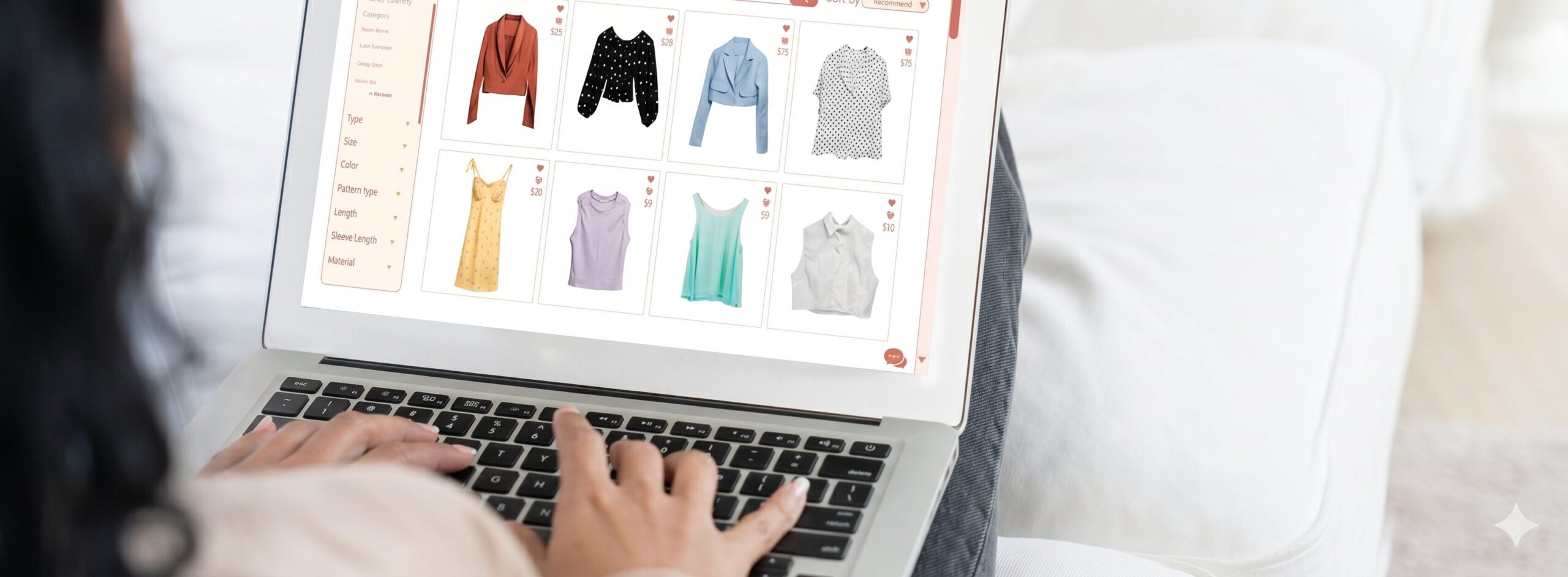
Free shipping is the most underused AOV lever in fashion e-commerce.
Most brands set a threshold at launch, maybe revisit it once a year, and treat it as a fixed piece of infrastructure. But the gap between where a shopper’s cart sits and where free shipping kicks in is one of the most reliable purchase nudges in all of retail.
Around 48% of online shoppers abandon their carts due to high delivery fees. But the inverse is equally true: when free shipping is within reach, a meaningful share of shoppers will add another item to get there. Around 58% of shoppers will add extra items to their cart specifically to reach a free shipping threshold.
The basic principle is straightforward: set your free shipping threshold just above your current average order value, not far above it. If your AOV is $95, a threshold of $110 or $120 is a realistic stretch goal for a shopper who’s already interested. A threshold of $200 is an obstacle.
The communication of the gap is just as important as where you set the threshold. A persistent, real-time message in the cart that says “You’re $18 away from free shipping” does a lot of work. It makes the math visible and frames the next add-to-cart as a rational decision.
You can also pair that message with a tight selection of relevant products in that price range, and you’ve built a small, effective upsell loop.
A few things worth testing:
- Vary the threshold by category if your catalog has significant price dispersion.
- Consider whether express or premium shipping tiers can do additional AOV work on top of the free threshold.
- Don’t underestimate the confirmation copy. “You’ve unlocked free shipping” is a small win that reinforces the purchase and sets a positive tone for the next visit.
Don’t Overlook the Importance of Confidence
None of these strategies require a platform overhaul or a major budget commitment. What they require is attention to the moments where shoppers are already close to saying yes to more, and a deliberate effort to remove the friction standing in the way.
The common thread across all five is confidence. Shoppers buy more when they feel good about what they’re adding to their cart, when the outfit comes together, when the bundle makes sense, when the recommendation feels right. But that confidence needs to be designed for.
Sizing and fit is one of the most powerful confidence signals in fashion e-commerce, and it runs underneath all of these strategies. A shopper who trusts that what they’re buying will actually fit them is more open to exploring, more willing to complete a look, and more likely to come back.
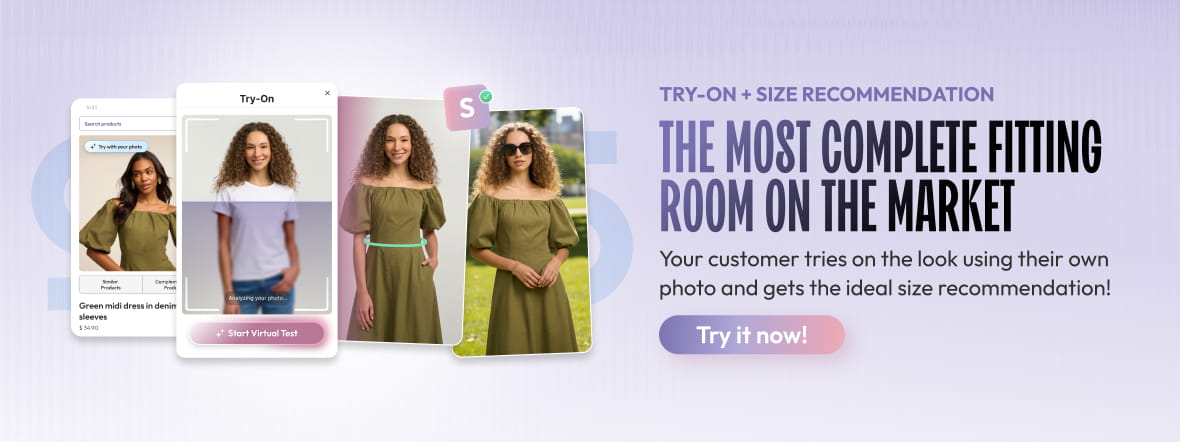
That’s exactly what Sizebay is set up to address. By combining size recommendation with virtual try-on, Sizebay gives shoppers the certainty they need to buy with confidence, and gives brands the conversion lift, lower returns, and higher AOV that follow from it.
Schedule a demo today to see how Sizebay can help your online apparel store increase orders and decrease returns and exchanges.
Related: Cutting-edge technology for virtual fitting rooms: the guide