Cross-selling is especially strong in fashion e-commerce since garments are worn in combination with one another, giving it more natural potential than almost any other retail category. Despite this, the average number of items purchased per transaction is 2.78. That’s the lowest of any e-commerce category.
If apparel lends itself so well to multi-item purchases, where’s the gap?
The usual explanation is that shoppers are simply not seeing the right products at the right time. To address this, brands use recommendation engines, optimize placement, improve their algorithms, and A/B test their way through “complete the look” layouts. Some of that works. But it doesn’t explain why a shopper who clearly loves a brand, who has spent twenty minutes browsing and found something they want, still leaves with just one item.
The real explanation goes beyond simply surfacing the right items at the right time, and has to do with fit and sizing confidence. If a shopper isn’t 100% confident the primary item they’re ordering will fit them, they’re not ready to consider a second one.
This guide is built around addressing that uncertainty as an effective cross-selling and upselling strategy for online fashion retailers. We’ll cover how cross-selling and upselling actually work in fashion, why the category is harder than most, and what it takes to build a strategy that actually increases average order value.
What is Cross-selling and Upselling?
Cross-selling and upselling get used interchangeably in most e-commerce conversations, but they’re actually different strategies that require different thinking.
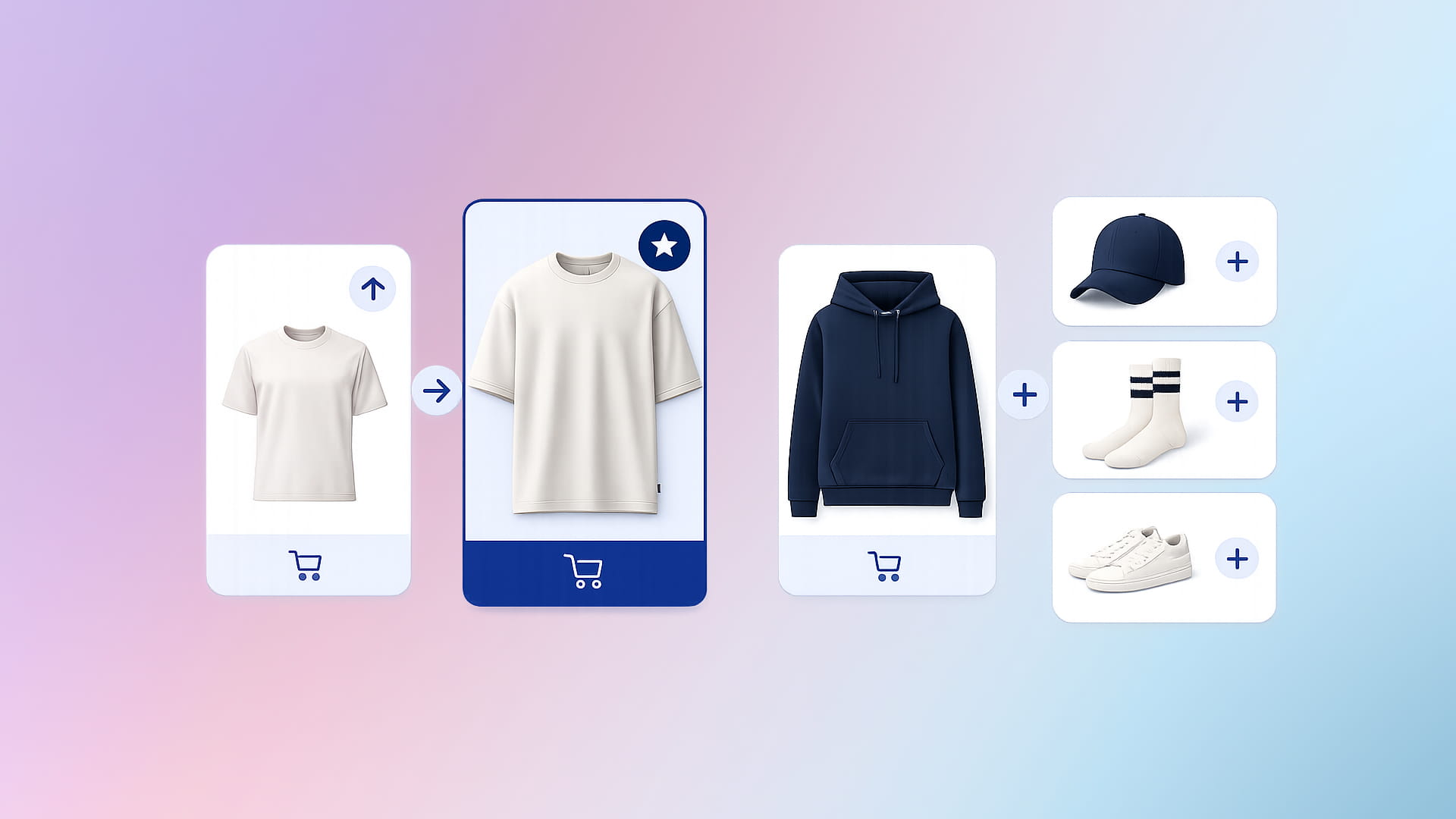
Cross-selling is about getting shoppers to purchase items. It’s the act of recommending a related product alongside what the shopper is already considering: a belt to go with the jeans they’re looking at, a jacket that completes the dress they’ve just added to their cart. The goal is to increase the number of items in the order, which drives average order value through volume. It should feel like a stylist pointing at the rack next to you and saying “this goes with that.”
Upselling, on the other hand, is about getting shoppers to purchase more expensive items. It’s encouraging the shopper to choose a higher-value version of what they’re already considering, whether that means a better fabric, a more versatile silhouette, or a style that suits their body more consistently than the one they’re currently looking at. The goal is to increase the value of the item itself, which drives average order value through quality rather than quantity.
The two strategies overlap in practice, but they have different goals and need different execution. Additionally, upselling isn’t always a viable strategy in fashion e-commerce. If a shopper is looking at a pair of shoes, there isn’t always a more expensive, premium version of the same product to offer them. Compare that with electronics, where someone shopping for a smartphone could upgrade to a 256GB version of the exact same phone instead of the base 64GB model.
For most fashion brands, cross-selling carries the weight. The question is why it’s so hard to get right in this category specifically, and the answer starts with what makes fashion different from everything else in e-commerce.
Why Fashion Is Perfect for Cross-Selling but Hard to Get Right

Fashion should be one of the easiest categories to cross-sell since clothes are meant to be worn together. Shoppers naturally think in terms of outfits, occasions, and how new pieces fit into what they already own. The logic of “this goes with that” is built into the category in a way that simply doesn’t exist for electronics or home goods.
Despite the potential, what makes cross-selling hard to get right in fashion e-commerce is also what makes it hard to get shoppers to purchase in the first place: sizing and fit uncertainty. In fashion and apparel, up to 40% of shoppers abandon their carts due to sizing uncertainty. It follows that if a shopper isn’t confident enough about their size to buy one item, they’re definitely not going to buy two.
With this in mind, for cross-selling and upselling strategies to be effective in fashion e-commerce, shoppers need to be confident in their size first and foremost.
How Do You Give Shoppers Confidence in Their Size Before They Buy?
The short answer is: by taking the guesswork out of sizing before they reach the point of hesitation.
Size recommendation tools do this by collecting a shopper’s measurements and fit preferences and translating them into a clear, personalized size recommendation for each product. Instead of a shopper staring at a size chart and hoping for the best, they get a direct answer: here’s your size for this specific item, based on how it fits and how you like to wear your clothes.
Virtual try-on takes that a step further by letting shoppers visualize how a garment will look on their body.
After receiving both pieces of information before checkout, the shopper is in a fundamentally different state of mind, and one that’s open to buying more rather than focused on managing risk.
With that foundation in place, let’s look at how to build on it with effective cross-selling strategies.
For a deeper look at how sizing confidence drives conversion in fashion e-commerce, read our guide on size recommendation tools and virtual fitting rooms.
Cross-Sell and Upsell Strategies That Work in Fashion
With sizing confidence established as the foundation, the next question is how to build a cross-sell strategy on top of it. In fashion, cross-selling and upselling aren’t really separate strategies. The goal in both cases is to help the shopper build a more complete, more confident purchase. The tactics overlap more than they differ, and the best strategies treat them as part of the same experience rather than two separate modules running in parallel.
Let’s take a look at how to recommend additional products, and the best places to recommend them.
How to Recommend the Right Products
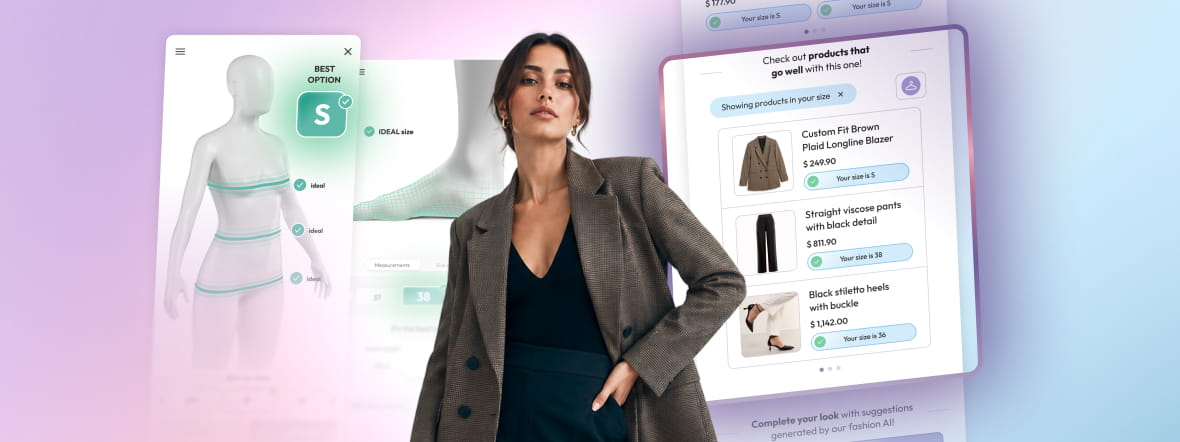
Effective cross-selling in fashion e-commerce boils down to recommending the right products for the right shoppers.
Complete the Look, Done Right
The most common cross-sell format in fashion is the complete-the-look recommendation, and for good reason. Shoppers think in outfits, so showing them a coordinated set of pieces alongside the item they’re considering maps directly onto how they already shop. The problem is that most complete-the-look implementations stop at style matching. They surface items that look good together in a studio photo without accounting for whether the recommended pieces are available in the shopper’s size. A recommendation that leads a shopper to a sold-out size is worse than no recommendation at all. It breaks trust at exactly the moment you’re trying to build it.
Fit-informed recommendations fix this by anchoring suggestions in the shopper’s actual size profile. When you know how a shopper fits, you can recommend complementary pieces with confidence, filtering out options that aren’t available in their size and surfacing ones that are likely to fit consistently. The difference in how this feels to the shopper is significant. “Customers who bought this also bought” is generic. “This pairs well with pieces that fit similarly” is useful. One feels like an algorithm. The other feels like a stylist.
What’s the difference between a cross-sell and a complete-the-look recommendation?
A cross-sell is any recommendation for a related product. A complete-the-look recommendation is a specific type of cross-sell that’s built around outfit logic, showing the shopper pieces that work together as a coordinated set. The distinction matters because complete-the-look recommendations require editorial thinking, not just algorithmic matching. Style alone isn’t enough. Size availability and fit consistency need to be part of the logic too.
When the Best Cross-Sell Is a Better Fit
The upsell opportunity in fashion works differently than it does in other categories. Rather than pushing a shopper toward a premium version of the same product, the most effective upsell in apparel is fit-based.
If a shopper is considering something that doesn’t suit their measurements particularly well, recommending a different cut or silhouette that fits them better is an upsell that feels like genuine advice rather than a sales tactic. A shopper who follows that recommendation and gets a great fit is more likely to spend more, come back sooner, and trust your recommendations the next time.
The same logic applies to versatility: showing a shopper that a slightly higher-priced piece works across more occasions or outfit combinations is a legitimate value argument that doesn’t feel like a push to spend more.
How do I know which products to recommend as fit-based alternatives?
This is where sizing data becomes a merchandising asset. If you have fit data on your catalog, you can identify which styles run small, which cuts suit specific body types, and which alternatives are likely to fit a shopper better than what they’re currently considering. Without that data, fit-based upselling is guesswork. With it, it becomes one of the most credible recommendation types you can offer.
Should You Bundle Products Together?
Pre-built outfits or curated sets reduce decision fatigue and make the cross-sell feel stylized instead of algorithmic. A shopper who doesn’t have to think about what goes together is more likely to add multiple items, and a brand that does the curation for them is one that feels like it understands their taste. That’s the standard every cross-sell recommendation should be held to: does this feel considered, or does it feel generated? Shoppers can tell the difference, and their behavior reflects it.
Does bundling actually increase AOV in fashion?
Yes, when it’s done with genuine editorial thinking behind it. Bundles that feel curated, where the pieces clearly belong together and are available in the shopper’s size, consistently outperform generic “frequently bought together” modules. The key is that the bundle has to feel like something a stylist put together, not something an algorithm generated. If the shopper has to do mental work to understand why those pieces are grouped, the bundle isn’t doing its job.
Need Help Making the Right Recommendations?
Sizebay’s Fashion Hub suite is built specifically for this. Fashion Hint suggests visually similar and complementary products at every stage of the shopping journey, from the product page to the cart, so recommendations feel relevant rather than random. Meanwhile, Fashion Looks takes it further with interactive outfit combinations that show shoppers how pieces work together on an avatar that reflects their style. Together, they turn cross-selling from a generic module into a personalized shopping experience that drives attachment and AOV.
Learn more about Fashion Hub.
Where to Recommend Complementary Products
Once you can make hyperpersonalized product recommendations, the next piece of the puzzle is determining the best places to surface those recommendations.
Product Detail Page

The PDP is the highest-intent moment in the session. The shopper is engaged with a specific product, they’re already considering a purchase, and they’re open to related suggestions. This makes it the right place for complete-the-look recommendations and fit-informed cross-sells.
Keep recommendations tightly related to the product on the page and make sure size availability is factored into what surfaces. A shopper who’s just resolved their size question is at their most receptive, and that’s exactly when a well-placed cross-sell has the best chance of converting.
Where on the site should cross-sell recommendations appear first?
The PDP is the highest-priority placement for most fashion brands because it’s where purchase intent is highest. That said, the right answer depends on your catalog and your shopper behavior. If your analytics show strong engagement at the cart stage, that’s worth investing in too. The PDP is the best starting point, but it shouldn’t be the only placement in your strategy.
Cart
The cart is a different moment entirely. The shopper has already made a decision, which changes the dynamic of any recommendation you show them. At this point, the goal isn’t to introduce something new. It’s to extend a decision they’ve already made.
Recommendations here should feel like natural additions to what’s already in the cart, easy to add without disrupting the path to checkout. The biggest mistake brands make at the cart stage is showing recommendations that are too different from what the shopper has already chosen, or that require them to start a new decision process. That’s how cross-sells become a distraction instead of a conversion driver.
Is the cart the right place for cross-sell recommendations, or does it distract from checkout?
It depends on how they’re implemented. Recommendations that are tightly related to what’s already in the cart and easy to add in one click tend to lift AOV without meaningfully impacting checkout completion rates. Recommendations that feel unrelated or require the shopper to leave the cart to explore a new product page are more likely to cause drop-off. Keep it simple, keep it relevant, and make the add-to-cart action as frictionless as possible.
Post-Purchase
Post-purchase is the most underutilized placement in fashion e-commerce, and consistently one of the highest-performing. Once the order is confirmed, the shopper’s anxiety is gone. They’re satisfied, they trust the brand, and they’re in a receptive state of mind. A well-timed recommendation on the confirmation page or in the order confirmation email, one that builds naturally on what they just bought, often outperforms on-site placements because it reaches the shopper at their most confident moment in the entire journey.
Do post-purchase recommendations actually convert?
Consistently, yes. The confirmation page and order confirmation email are two of the highest-engagement touchpoints in the entire funnel, precisely because the shopper is in a positive, satisfied state. A recommendation that arrives when the shopper feels good about their purchase, and that clearly complements what they just bought, is one of the easiest cross-sell conversions you can generate.
How to Measure Your Cross-Selling Efforts

A strong cross-sell strategy is only as good as your ability to measure it. These are the metrics that matter.
Attach Rate
The percentage of orders containing more than one item. This is the most direct signal of whether your cross-sell strategy is working. If it’s not moving, your recommendations aren’t converting.
Average Order Value
Tracks the combined impact of cross-sell volume and upsell value. Segment this by whether the shopper used a fit tool to isolate the confidence effect on spending behavior.
Related: 5 ways to Increase Average Order Value in Fashion E-commerce
Cross-Sell Conversion Rate
The percentage of shoppers who see a cross-sell recommendation and actually add it to their cart. This tells you whether your recommendations are relevant and well-placed, or whether they’re being ignored. A low rate is usually a signal that the recommendations feel generic, are showing unavailable sizes, or are appearing at the wrong moment in the journey.
Customer Lifetime Value
The long-term metric that ties everything together. A shopper who buys the right size, has a good experience, and finds value in your recommendations is more likely to come back and spend more over time.
Read More: 9 Essential Key Performance Indicators for Fashion E-Commerce
Sell More by Increasing Shopper Confidence
Cross-selling and upselling in fashion e-commerce are more of a confidence problem than a technology or placement problem. Shoppers who aren’t sure their size is right aren’t ready to say yes to a second item, and no recommendation engine, however sophisticated, can close that gap on its own.
The key to a successful cross-selling strategy is establishing shopper confidence first. Once you’ve done that, you can focus on making the right recommendations, on the right pages.
One of the most important places to display relevant product recommendations is your product pages. For more tips on how to improve your product pages, check out our anatomy of a high-converting product page.