

Effective fashion inventory management doesn’t stop at the warehouse — it starts with the markdown page. Almost every online fashion retailer has a section on their site dedicated to unsold stock: styles that never sold, garments that came back as returns, and pieces that were simply overstocked.
Most teams treat that page as a loss to write off and move past. But for anyone serious about inventory management, that unsold stock is one of the richest data sets a fashion brand has and most of it goes unread.
Industry numbers back up how big this problem is. Somewhere between 20% and 30% of fashion inventory goes unsold every season, ending up heavily discounted, liquidated, or destroyed. Even a brand as large as Nike feels it: an aggressive markdown push to clear excess stock in 2024 dragged gross margin down 190 basis points and contributed to a 44% drop in net income. Those numbers represent a huge share of every collection failing to convince shoppers for whom they were designed.
The instinct is to treat every one of those styles the same way: discount it, clear it, forget it. But a hoodie that sat on the shelf because it was priced wrong is a completely different problem than a dress that got returned constantly because the fit ran small, or a jacket that photographed fine but never looked convincing enough to buy. Lump them together and you learn nothing. Break them apart and you get a playbook for the next collection.
Not All Unsold Inventory Is the Same Problem
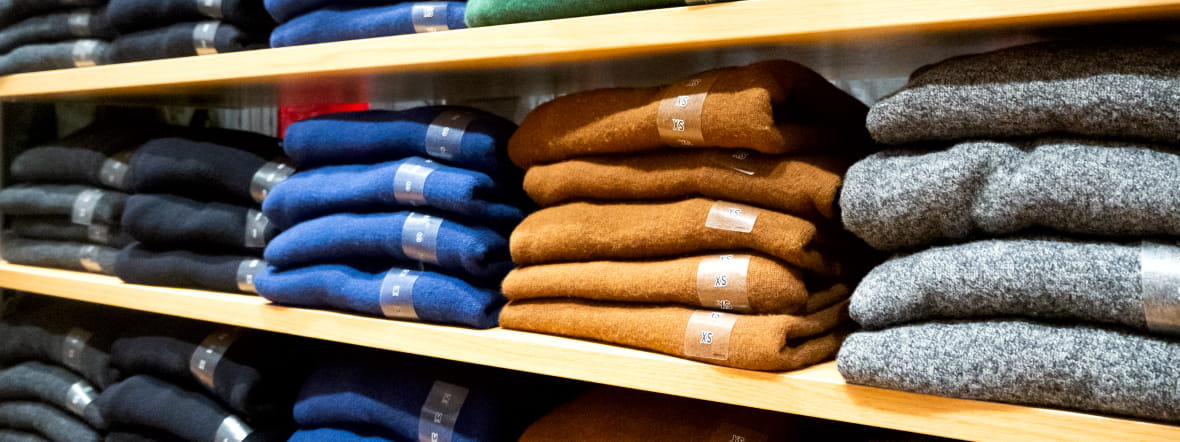
When a style underperforms, there are usually four different stories hiding behind that one outcome, and each one points a retailer toward a different fix. Here are the four most common reasons for underwhelming sales.
The style didn’t match what shoppers wanted to wear.
Sometimes the product just wasn’t right for that customer base with a style, cut, or trend direction that didn’t match what they actually wanted to wear. It doesn’t matter how well priced or photographed a garment is if target shoppers aren’t interested. For example, a brand pushing a bold print into a customer base that has consistently bought neutral, minimal pieces will see slow sell-through no matter how strong the campaign is. The tell in the data is low add-to-cart and weak repeat views even after markdowns, which means the resistance is to the product itself, not the price tag on it.
The fit didn’t match shoppers’ bodies.
For other styles, the issue comes down to the garment’s fit and construction. In this case, the garment’s pattern or sizing chart doesn’t match the body types of the people actually buying it, so it looks fine on a product page but wrong on almost everyone who tries it on. This is different from a general fit complaint because it’s usually concentrated. A dress cut narrower through the hip than the brand’s usual patterns will generate returns clustered in one or two sizes instead of spread evenly across the run. That concentration is the signal that a modeling problem, not shopper indecision, is behind the numbers.
The size chart didn’t get shoppers into the right size.
A third group shows up in the return and exchange data long before it ever reaches a write-off report. High-exchange styles are quietly expensive. Every swap costs money to ship, restock, and reprocess, and it signals the shopper wanted the product but the brand didn’t give them a reliable way to get the right size the first time. A sneaker silhouette that consistently pushes customers up half a size can look like a bestseller on the sales report while eroding margin with every exchange behind the scenes.
The price or positioning didn’t match the customer.
Finally, some styles simply sit because they’re priced above what that customer is willing to pay for the category, or they drift too far from the silhouettes and fabrics that the customer base already trusts. A premium-priced piece launched into a segment that mostly buys midrange will sit on the shelf regardless of how accurate the fit is or how well it’s styled, because the resistance shows up before the shopper ever gets to sizing or presentation.
Why does this distinction matter?
Because the fix for each is different. A styling problem needs a merchandising and content response. A modeling problem needs a sizing and fit response. Treating all four as “the product didn’t sell” means the next collection repeats the same mistakes, just in a different colorway.
Better Inventory Management Starts With Avoiding Markdowns
Sorting the four reasons only pays off if each one leads to a different action. Sizing and fit issues marked by high cart abandonment rates and return/exchange volume call for the same fix, which involves better size recommendations. Style rejection can be addressed with better recommendation engines and personalization. Meanwhile, if the issue is price or positioning, the solution isn’t something a product page fixes at all. Instead, it should be treated as input for next season’s planning, not something to solve today.
Fix Sizing and Exchange Problems With a Virtual Fitting Room
Better inventory management should start with the return and exchange data, since it’s the most direct signal available. Fit and sizing issues are responsible for up to 70% of all apparel returns, and when that inventory comes back, it often needs to be heavily marked down, or is never resold.
A lot of returns aren’t even due to shoppers being indecisive, but instead practicing size bracketing (ordering two or three sizes of the same item with a plan to return whichever ones don’t fit), which is now standard behavior for many online shoppers.
The issue isn’t that customers don’t want the product, but that they don’t trust the size chart enough to order just one size and commit.
The fix is a size recommendation tool or virtual fitting room. When a style has a genuinely different fit than what a customer base is used to, whether it runs narrow through the shoulder, sits differently at the waist, or has a pattern that doesn’t match the brand’s usual sizing, that’s not something a size chart communicates well. Size recommendation tools and virtual try-on can show shoppers how a specific garment will fit on their body, before they buy, which is a very different experience than reading a size chart and guessing.
The impact for inventory management is twofold. By ensuring your shoppers know their ideal size and understand the fit of garments before they buy, you reduce returns and exchanges due to incorrect sizing, while also increasing conversions that wouldn’t have happened when shoppers were unsure of which size to buy. In both cases, your sell-through rate is positively impacted and less inventory will have to be discounted at the end of the season.
Why do shoppers abandon carts over sizing?
Because uncertainty is expensive for them too. Getting it wrong means a return, a delay, and the hassle of sending something back. Faced with that risk, a lot of shoppers just don’t buy at all, and that hesitation never even shows up in the return data. It shows up as a lost sale that looks, on paper, like disinterest in the product.
Related: How to Reduce Cart Abandonment Rates in Fashion E-commerce
Fix Style-Rejection Problems with Recommendation and Styling Engines
Sometimes the modeling is accurate and fit data shows no issues, yet shoppers still struggle to picture how a garment fits into their personal style or existing wardrobe. This styling gap often goes unnoticed because it doesn’t appear in return data. Instead, it reveals itself through low add-to-cart rates and weak product page engagement, suggesting shoppers fail to recognize the item’s potential.
Why does styling influence conversion more than product photography alone? Because shoppers aren’t simply buying the right size. They’re buying a complete look and a way of dressing. While fit helps customers choose the correct size, styling helps them visualize how a garment works within an outfit. Many underperforming products suffer from one of these challenges, not necessarily both.
Style rejection generally falls into two categories, each requiring a different solution.
The first is a styling problem. Shoppers like the product but can’t imagine how to wear it. When a garment is displayed alone, on a plain background, or with only a generic model, customers must visualize the complete outfit themselves.
Therefore, showing products as part of styled looks, instead of in isolation, makes it easier for shoppers to picture themselves wearing the garment. A dress that performs poorly on its own, for example, may convert far better when paired with complementary layers and accessories.
The second is a targeting problem. The product is suitable, but it’s being shown to the wrong audience. A garment designed for one fashion preference is unlikely to convert when presented to shoppers with different tastes.
Personalized product recommendations based on browsing behavior, purchase history, and retained items connect each product with shoppers most likely to buy it. As a result, products that appear unsuccessful overall can perform significantly better when presented to the audience they were originally designed for.
Recommendations Based on Data
Sizebay’s Fashion Hub suite addresses both of these problems with two solutions that make sure styling is not the cause of unsold inventory. Fashion Looks showcases complete outfit combinations based on user style. This makes it easier for shoppers to imagine how the garment they’re browsing can fit into the wardrobe and match with other pieces. Fashion Hint, on the other hand, makes sure the right garments are surfaced for the right shoppers. The tool suggests visually similar and complementary products based on shoppers’ personal preferences.
Fix Price and Positioning Problems by Feeding the Data Into Planning
Price and positioning are different from the other three reasons because there’s no product page fix. No amount of better photography, styling, or sizing accuracy moves a style that’s priced above what that customer is willing to pay, or one that’s simply too far from what they usually buy. The resistance shows up before the shopper ever gets to the size chart or the styled outfit.
That’s actually useful, because it means the data is pointing at assortment, not experience. A style that only moved when fully marked down signals that the original price was too high for shoppers. Conversely, a style that doesn’t move even while fully marked down, despite decent traffic and clean fit and return data, is signaling category drift. In both of these cases, the fix isn’t something to bolt onto the product page. Both pieces of data should feed into next season’s planning, with pricing closer to what the customer has already proven they’ll pay and styles closer to what they’re already used to purchasing.
Reading the Data at the Source

For inventory management, the real value of separating these four failure types is that it turns clearance data into planning data. A style that sat unsold because of price tells a merchandising team something about where that customer’s spend ceiling is. A style with heavy exchanges tells the sizing team exactly which pattern or fit needs revisiting before it goes into production again. And a style with weak engagement tells the content team the product is good, but it just wasn’t presented in a way that closed the sale.
If you build this feedback loop, connecting size recommendation data, virtual try-on interactions, and styling engagement back to what’s actually sold, your inventory management results will compound. Fewer returns and exchanges free up margin, while better styling and recommendations lift conversion on products that were already fine, just not presented in the right ways.
All this requires reading your unsold or discounted inventory correctly this season, and treating it as the most honest customer research a brand already owns.
If you’re looking for other ways to better manage your inventory, be sure to read our guide to cross-selling and upselling fashion e-commerce.